Hours, directions, entrances and the best time to arrive
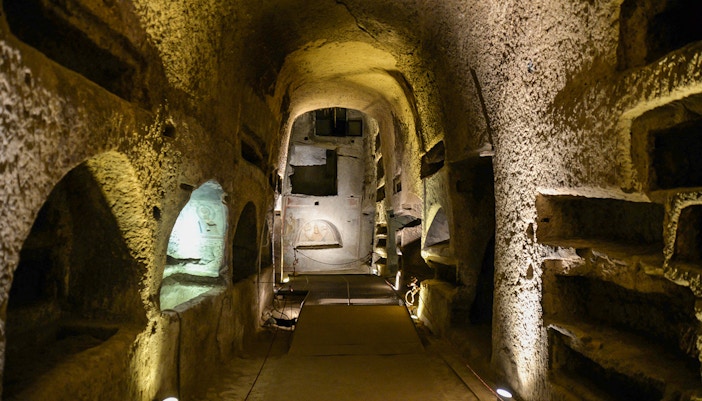
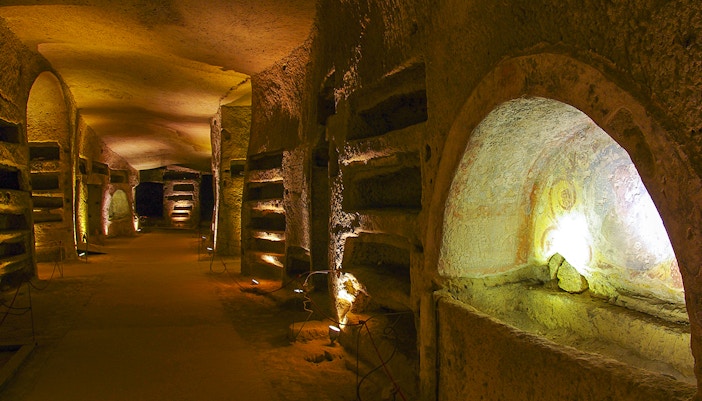
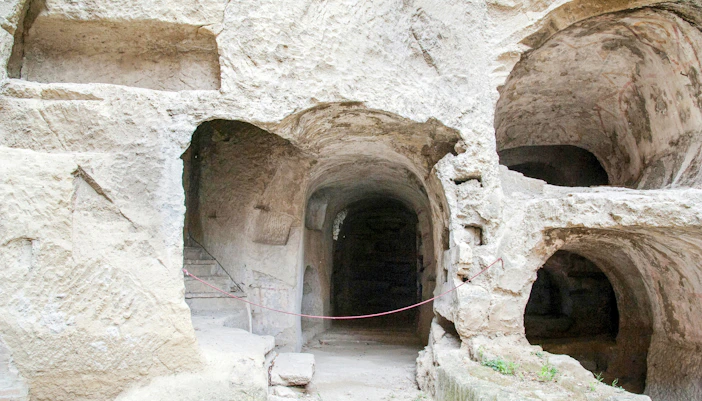
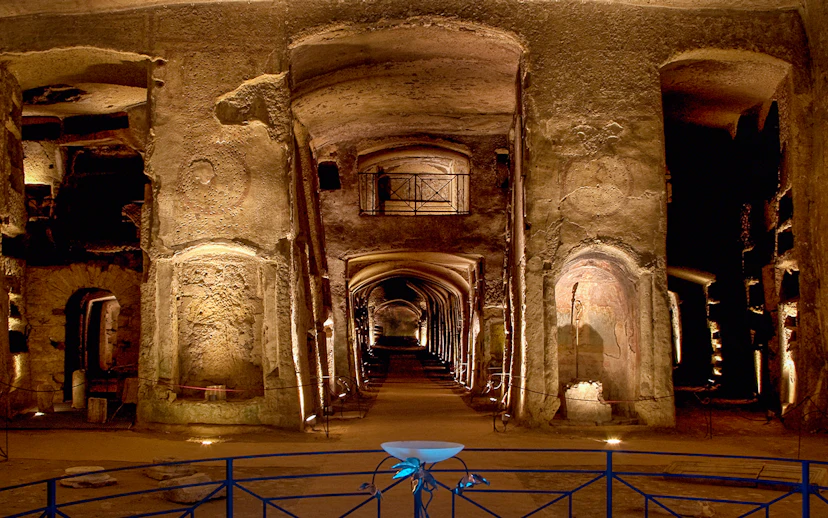
The Catacombs of San Gennaro are Naples’ most important early Christian burial site, best known for their vast underground basilicas, frescoed tombs, and the chamber linked to the city’s patron saint. The visit is less about bones and more about space, art, and story: broad tuff-stone corridors, cool air, and a guide-led route that moves faster than people expect. The biggest difference between a great visit and a disappointing one is booking the right time slot and arriving knowing this is a history-rich tour, not a horror attraction. This guide covers timing, entry, and what to prioritize.
If you want the short version before you book, start here.
🎟️ Time slots for Catacombs of San Gennaro often fill 1–3 days in advance during summer weekends and holiday periods. Lock in your visit before the time you want is gone. See ticket options
Hours, directions, entrances and the best time to arrive
Visit lengths, suggested routes and how to plan around your time
Compare all entry options, tours and special experiences
How the site is laid out and the route that makes most sense
Underground basilicas, Crypt of the Bishops, and San Gennaro’s tomb
Restrooms, parking, accessibility details and family services
The catacombs sit in Rione Sanità below Capodimonte hill, about 2km north of Naples’ historic center and closest to the Capodimonte / Basilica del Buon Consiglio bus stop.
Via Capodimonte 13, 80136 Naples, Italy
→ Open in Google Maps
Full getting there guide
The biggest mistake here is following old accessibility directions or neighborhood shortcuts instead of heading to the active entrance by the basilica ticket office. At the moment, most visitors should treat this as a one-entrance site.
Full entrances guide
When is it busiest?
Late morning to mid-afternoon, especially Friday–Sunday from May to September, when English tours, walk-ins, and day-trippers overlap.
When should you actually go?
Take the 10am tour on a Thursday or Friday if you can; groups are smaller, the guide is easier to hear in the echoing basilicas, and you won’t lose time waiting for the next slot.


Flexible entry to Naples' largest Christian burial sites with an expert guide.
Inclusions #
1-hour guided tour of the San Gaudioso Catacombs with entry
1-hour guided tour of the San Gennaro Catacombs with entry
Entry to Basilica di Santa Maria della Sanità
Expert English or Italian-speaking guide


Inclusions #
1-hour guided tour of the Catacombs of San Gaudioso
Expert English or Italian-speaking guide
Entrance to Catacombs of San Gennaro
Artecard Campania (optional)
Artecard Napoli (optional)


Inclusions #
Free entry to the first 3 sites
Up to 50% discount from the 4th site onwards
3 days of unlimited public transport use
Discounts and concessions
Tourist assistance while using the card


Inclusions #
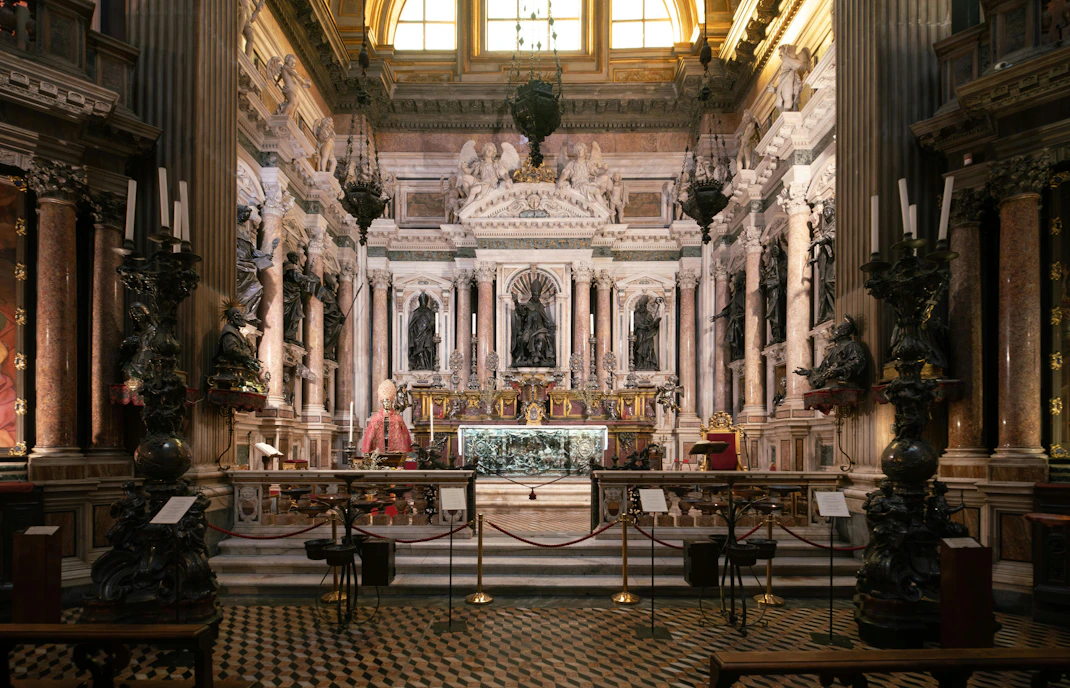
Entry to the Chapel of the Treasure of San Gennaro
Official audio guide in 5 languages


Inclusions #
Free entry to the first 2 sites of your choice (Full list here)
Up to 50% discount from the 3rd site onwards
3-day validity
Tourist assistance in English and Italian
Unlimited travel on Unicocampania Consortium network
| Ticket type | What's included | Best for | Price range |
|---|---|---|---|
Catacombs of San Gennaro guided tour | Timed entry + live guide + Catacombs of San Gaudioso return visit | A first visit where you want the core site without giving up too much time elsewhere in Naples. | From €13 |
Miglio Sacro – Sacred Mile tour | Catacombs of San Gennaro + Catacombs of San Gaudioso + Rione Sanità walking tour + local guide | A half-day visit where you want the catacombs to make sense in the context of the neighborhood above them. | From €19 |
AperiVisita evening tour | After-hours catacombs entry + guided tour + aperitivo + occasional live performance | An evening plan when you want a more atmospheric version of the site than the daytime standard tour. | From €15 |
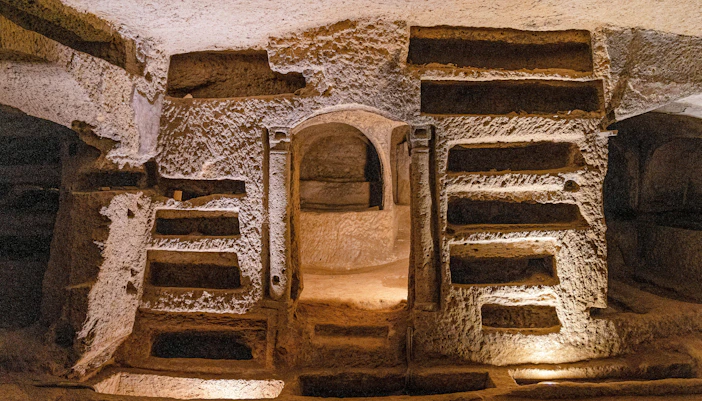
The site is best explored on foot in about 45–60 minutes, and the guided route matters more than distance because the two levels and side crypts don’t read clearly on your own. You enter near the upper level, and the main sacred spaces fan out from the basilica area before the route drops deeper into older burial galleries.
Suggested route: stay near the guide from the upper basilica onward, then look sideways in the lower galleries; most visitors remember the saint’s tomb but miss the side-chamber frescoes because the group naturally keeps moving.
💡 Pro tip: Stand near the front when the guide reaches the upper basilica; the acoustics are beautiful, but voices blur at the back and that’s where most people miss the fresco explanations.
Get the Catacombs of San Gennaro map / audio guide


Era: 4th century
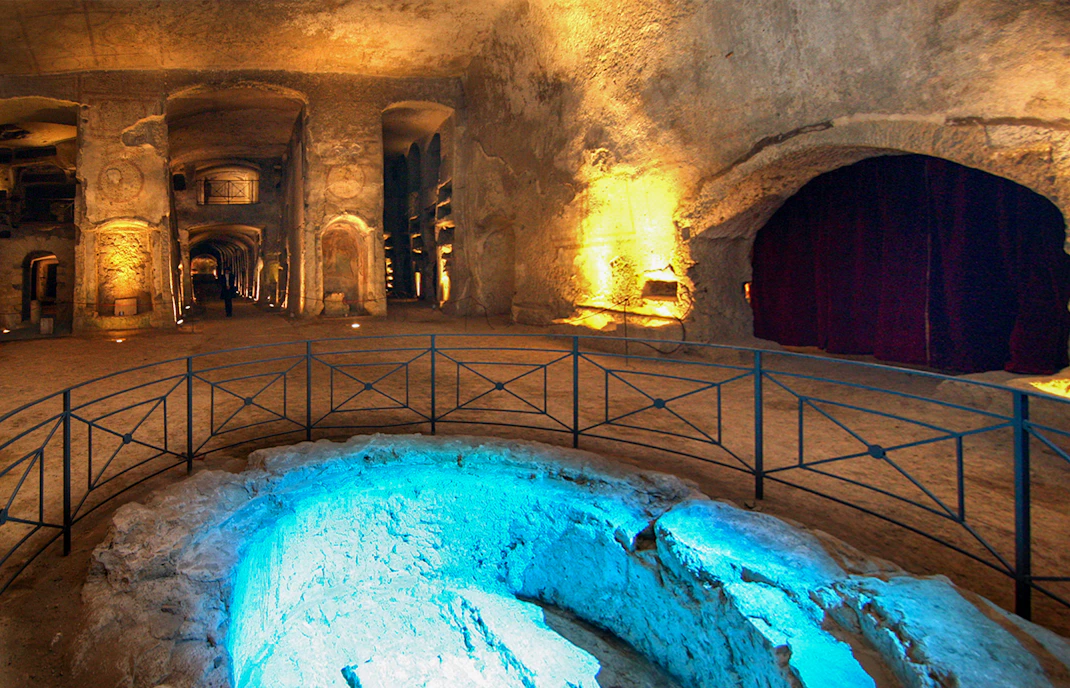
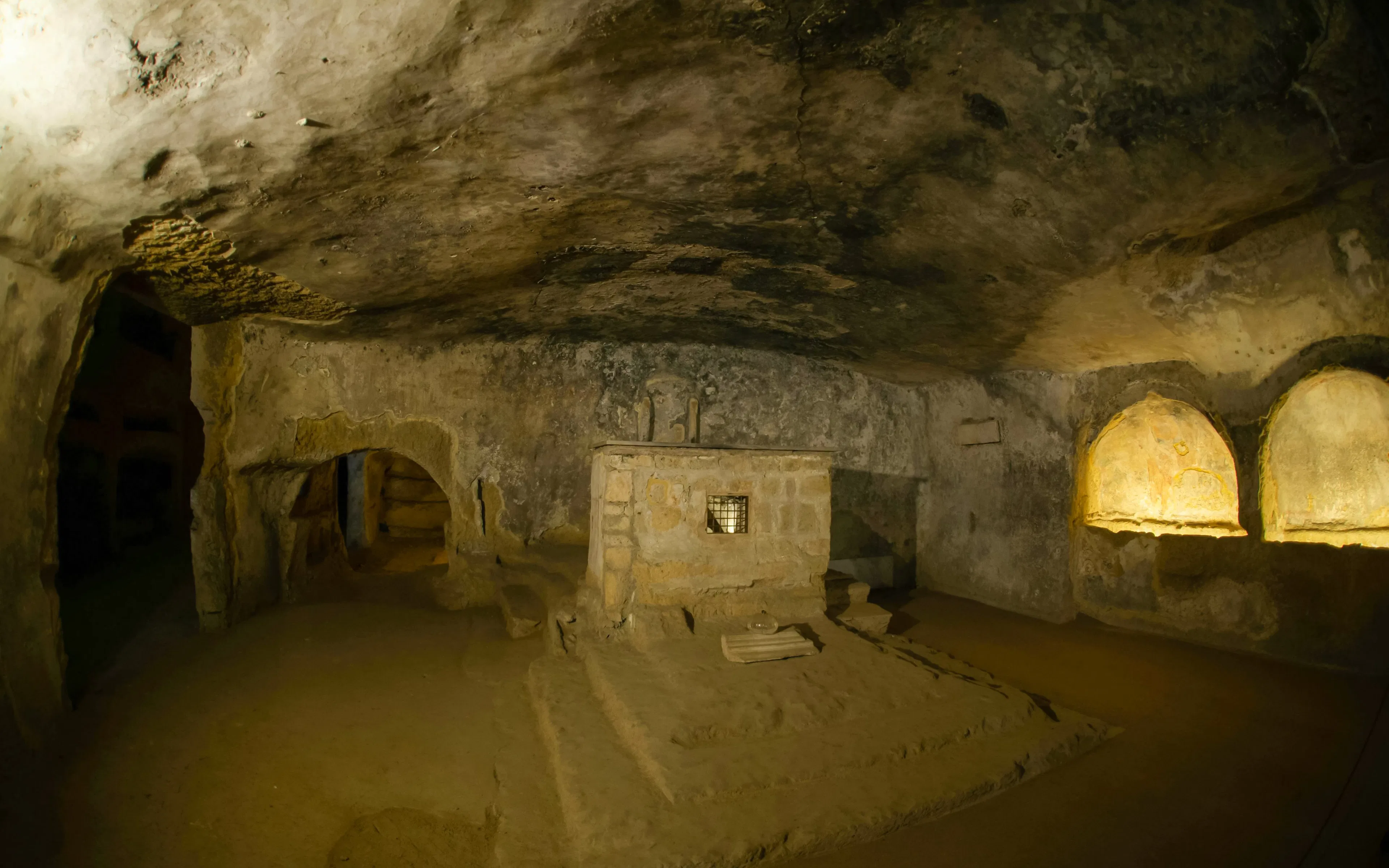
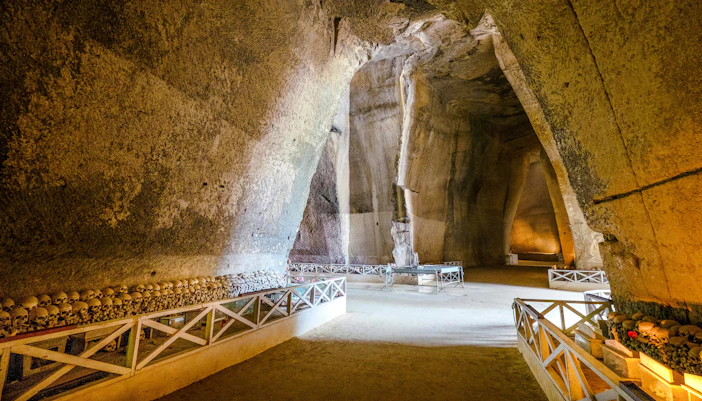
This is the oldest major worship space in the complex, carved directly into the tuff and still centered on a rock-cut altar and bishop’s throne. It’s the place that makes the site feel less like a burial maze and more like an underground church. What most visitors miss is how intact the liturgical layout still feels once you stop looking only at the tomb niches.
Where to find it: In the lower catacomb, near the broadest chamber on the guided route.
Era: 5th century onward
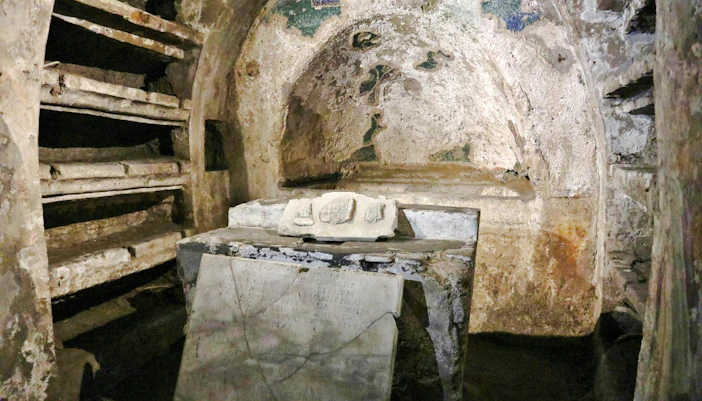
This burial area gathers the tombs of Naples’ early bishops and gives real weight to the catacombs’ status as a sacred destination, not just a cemetery. The arches and vaults matter as much as the graves here. Many visitors look quickly, then move on, missing the surviving painted details and the sense of hierarchy built into the space.
Where to find it: Off the upper-level basilica area, before the route moves deeper into the galleries.
Era: 5th-century pilgrimage site
The chamber associated with San Gennaro is visually simple, which is exactly why it lands so strongly once the guide explains what it meant for Naples. This was the space that turned the catacombs into a pilgrimage destination and reshaped the whole burial complex around it. Most people expect something more elaborate and nearly miss the emotional weight of the room itself.
Where to find it: In a quiet chamber off the upper catacomb, reached during the guided route.
Era: 5th century
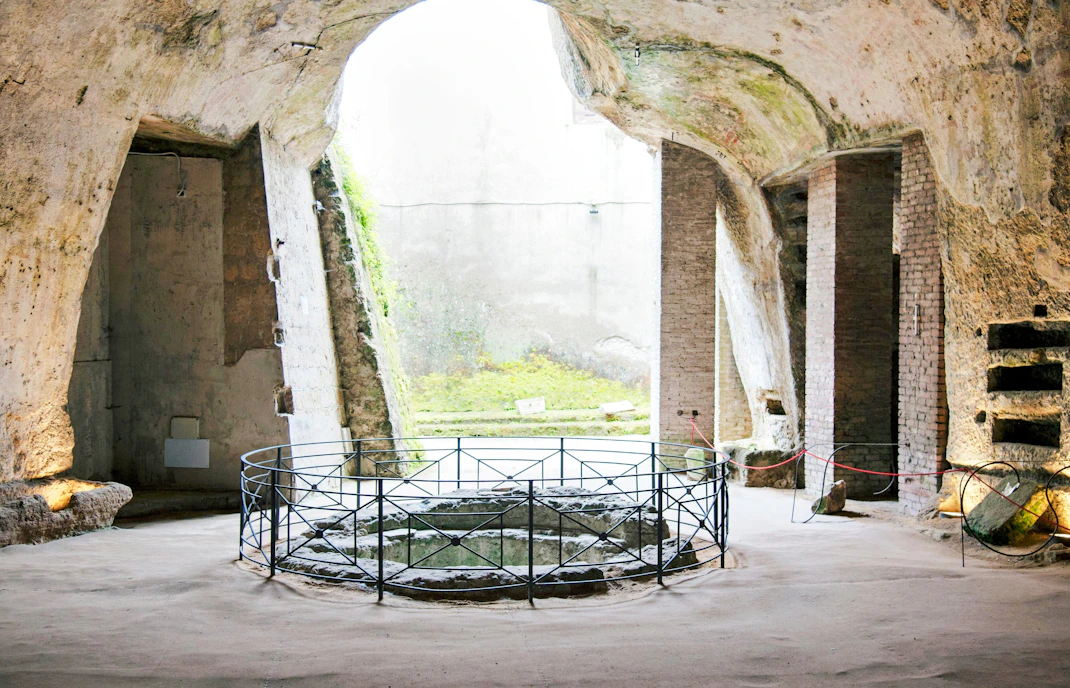
This large three-naved basilica on the upper level shows how the site expanded once San Gennaro’s cult drew more devotion and more burials nearby. It’s one of the clearest places to understand scale underground. Many visitors focus on the central aisle and miss how unusually spacious the side areas are for a catacomb setting.
Where to find it: On the upper level, connected to the main ceremonial zone of the visit.
Era: 3rd–5th centuries
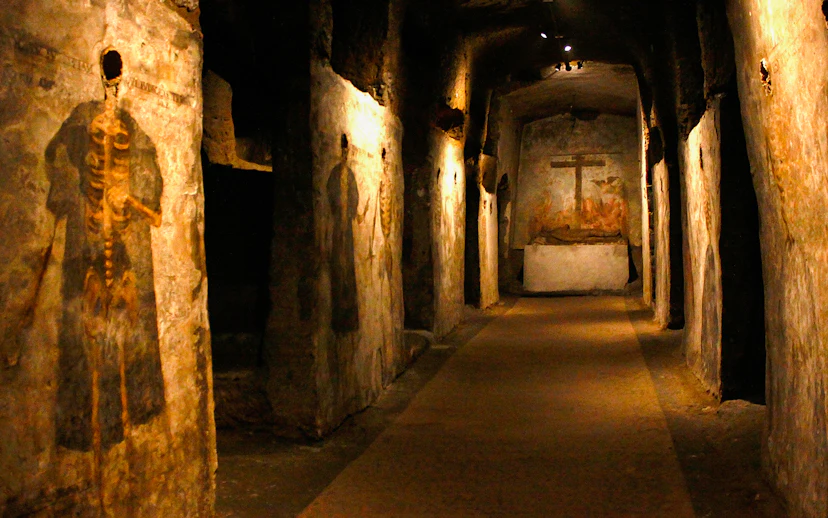
The smaller painted burial chambers are where the catacombs feel most intimate, with traces of family memory surviving in fragile images rather than grand architecture. These frescoes are some of the oldest Christian artworks in southern Italy. Because lighting stays soft and the group keeps moving, people often miss the painted details unless they pause when the guide points them out.
Where to find it: In side chambers branching off the main galleries, especially around the upper route.
This is a good visit with school-age children and curious teens, especially if they like stories, tunnels, and early Christian art more than jump scares.
Photography and video are not allowed inside the catacombs. That ban applies throughout the underground route rather than only in one chamber, so flash, tripods, and selfie sticks are effectively off the table; if you want photos, save them for the entrance area or the basilica above ground.
Catacombs of San Gaudioso
Distance: 1.5km — 20 min walk
Why people combine them: It’s included with the same ticket, sits in the same neighborhood, and gives you a tighter, more bone-focused contrast to San Gennaro’s larger and more architectural spaces.
Book / Learn more
✨ Catacombs of San Gennaro and Catacombs of San Gaudioso are most commonly visited together — and simplest to do on the same ticket. The included second visit saves you buying separate entry and makes the Sanità catacomb story feel complete. → See combo options
Capodimonte Museum
Distance: 800m — 10 min walk
Why people combine them: The pairing makes logistical sense on the same hill, and it gives you one of Naples’ best above-ground art collections right after one of its strongest underground heritage sites.
Book / Learn more
Cimitero delle Fontanelle
Distance: 1.2km — 15 min walk
Worth knowing: If San Gennaro leaves you wanting a more intense encounter with Naples’ relationship to death and devotion, this ossuary gives you that in a much rawer form.
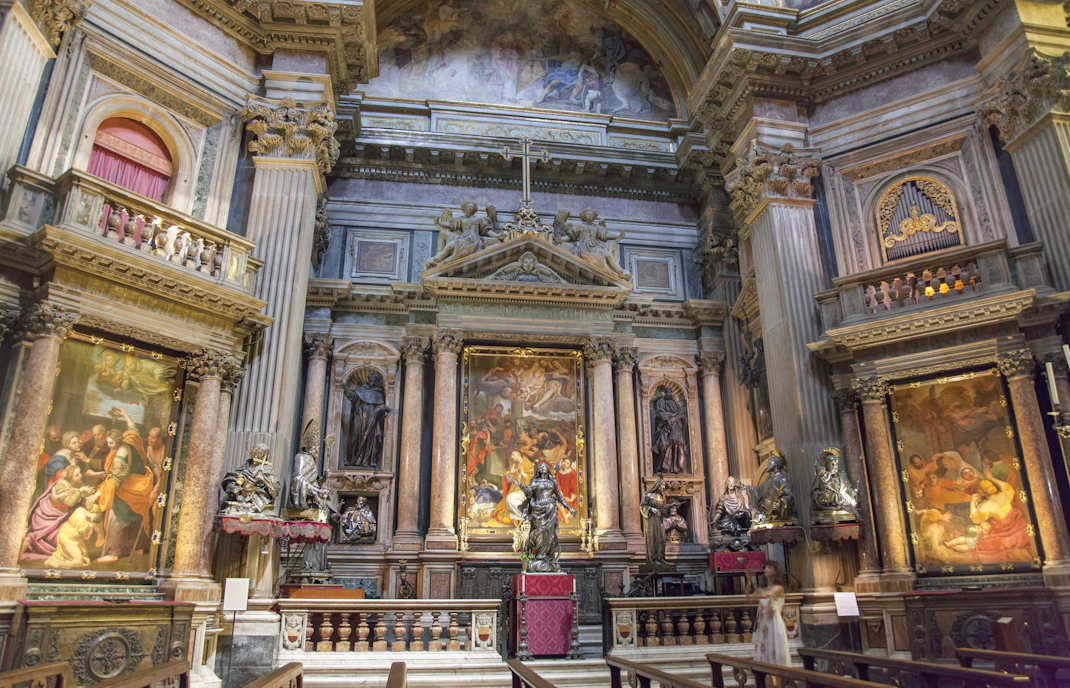
Basilica di Santa Maria della Sanità
Distance: 1.3km — 15 min walk
Worth knowing: This is the church above the San Gaudioso catacombs, and it adds useful neighborhood context if you want to understand Sanità beyond the underground sites.
Rione Sanità is atmospheric, local, and much more interesting than its old reputation suggests, but it isn’t the easiest base for a first Naples trip if you want to walk everywhere at night without thinking about transit. Stay here if you value neighborhood character and want Capodimonte and the catacombs close by; otherwise, base yourself more centrally and come up for half a day.
Most visits take 45–60 minutes. If you also use your included access to the Catacombs of San Gaudioso on the same day, plan closer to 2 hours total including the walk between sites.
Yes, it’s smart to book in advance, especially for summer weekends and late-morning English tours. You can sometimes still get weekday shoulder-season slots last minute, but timed tours have limited capacity and walk-ins may wait for the next opening.
Yes, if by ‘skip the line’ you mean reserving a timed slot in advance. There isn’t a huge premium fast-track product here, but pre-booking saves you from waiting for the next available guided departure, which matters more than a physical queue.
Arrive about 10 minutes early. That gives you enough time to check in, sort tickets, and join the right language group without cutting it close if the entrance area is busy.
Yes, but keep it small. There are no lockers on site, and stairs plus guided movement through underground spaces make large backpacks or luggage unnecessarily awkward.
No, photography and video aren’t allowed inside the catacombs. The rule applies across the underground route, so don’t plan on flash, tripods, or quick phone shots once the tour starts.
Yes, but your group will still visit on a guided tour. Standard departures are public group tours, and larger private or educational group arrangements usually work best when reserved ahead.
Yes, it works well for school-age children and teens if expectations are set properly. The visit is more about underground architecture, saints, and stories than scary bone displays, and the standard route is short enough for most families.
Only partially right now. Inside, the corridors are unusually wide and gently sloped for a catacomb site, but the step-free entrance is temporarily closed, so the main entrance still involves a substantial staircase.
Yes, there’s a café on-site and better food options in Rione Sanità nearby. The café is fine for coffee and a quick snack, while pastry shops and pizza spots in the neighborhood are better if you want a real meal after the tour.
Mostly tomb architecture, underground basilicas, and early Christian art. You’ll see burial niches and some human remains in context, but this isn’t a bone-heavy spectacle like Paris; the real draw is space, frescoes, and the San Gennaro story.
Yes, your standard Catacombs of San Gennaro ticket also includes a guided visit to Catacombs of San Gaudioso. You don’t need to buy a second full-price ticket, and you can use that included visit within 12 months.