Tickets Naples

Pompeii vs Herculaneum

Pompeii and Herculaneum were both buried by Vesuvius in AD 79—one a sprawling Roman city, the other a smaller, wealthier seaside town. Travelers often compare them for time, crowd levels, and preservation differences. Here’s the side-by-side guide to decide fast—or plan a smart same-day visit.

Quick comparison – Pompeii vs Herculaneum

FeaturePompeiiHerculaneum

Location

Pompeii town, ~25 km S of Naples

Ercolano, ~11 km SE of Naples

Price

€18 “Pompeii Express” (city only); €22 “Pompeii+” incl. suburban villas; €26 3-day multi-site “Pompeii+” with shuttle; under-18 free; EU 18–24 €2. Daily cap & nominative tickets in effect.

€16 normal; €2 ages 18–25 (EU); under-18 free; first Sundays free on select dates. Season tickets available.

What is it?

Large Roman city with forum, theatres, baths, villas, streets

Compact coastal town with elite villas, organic materials preserved

Built / Age

Flourished 2nd c. BC – AD 79

Prosperous 1st c. AD seaside town

Size

Very large; multi-zone site needing half/full day

Smaller; walkable in 2–3 hours

Timings

Nov–Mar: 09:00–17:00 (last entry 15:30). Apr–Oct: 09:00–19:00 (last entry 17:30). Closed 25 Dec & 1 Jan.

Mar 16–Oct 14: 08:30–19:30 (last entry 18:00). Oct 15–Mar 15: 08:30–17:00 (last entry 15:30). Closed 1 Jan & 25 Dec.

Duration needed

4–6 hrs for highlights; full day if thorough

1.5–3 hrs

Queues / Entry

High demand; advance online booking recommended; daily limit 20,000 from Nov 15 (time-slot caps in summer).

Moderate; time slots via official vendor; often easier same-week availability.

Best time to visit

Opening or late afternoon; cooler months less crowded

Opening or late; Friday/shoulder seasons calm

Accessibility

“Pompeii for All” step-free route from Piazza Anfiteatro; lifts at Antiquarium.

Step-free routes; wheelchair-friendly promenades; new beach access re-opened (wheelchair reachable).

Kid-friendly

Vast outdoor site; uneven surfaces; bring sun/hat

Compact, shaded streets; easier with young kids

Highlights

Forum, Theatre, House of the Faun, Villa of the Mysteries, plaster casts, frescoes

House of the Deer, House of the Relief of Telephus, carbonized wood, boat sheds & skeletons, ancient beach

Dining

Cafés/kiosks near entrances; options in modern Pompei

Small on-site cafés; many eateries uphill in Ercolano

Getting there

Circumvesuviana Pompei Scavi–Villa dei Misteri (Naples–Sorrento line); also FS Pompei for Anfiteatro gate; “Pompei Link” bus.

Circumvesuviana Ercolano Scavi; ~6–10 min walk to gate

Passes

MyPompeii annual €35; some regional Campania Artecard products include entry (reservation rules apply).

Accepts Campania Artecard; activate at ticket office.

Verdict – Which should you visit?

Short on time or prefer a compact, vividly preserved site?

Choose Herculaneum—smaller crowds, astonishing wood and organic remains, and an easy 2–3-hour circuit.

Want breadth and iconic landmarks? Pick Pompeii—grand streets, theatres, villas, and casts, but plan half a day and book early due to visitor caps.

Do both without the hassle

Pair Herculaneum in the morning with Pompeii after lunch using the Circumvesuviana line. Pre-book both time slots and carry water; add the Campania Artecard if you’re also visiting Naples museums.

Major differences between Pompeii and Herculaneum explained

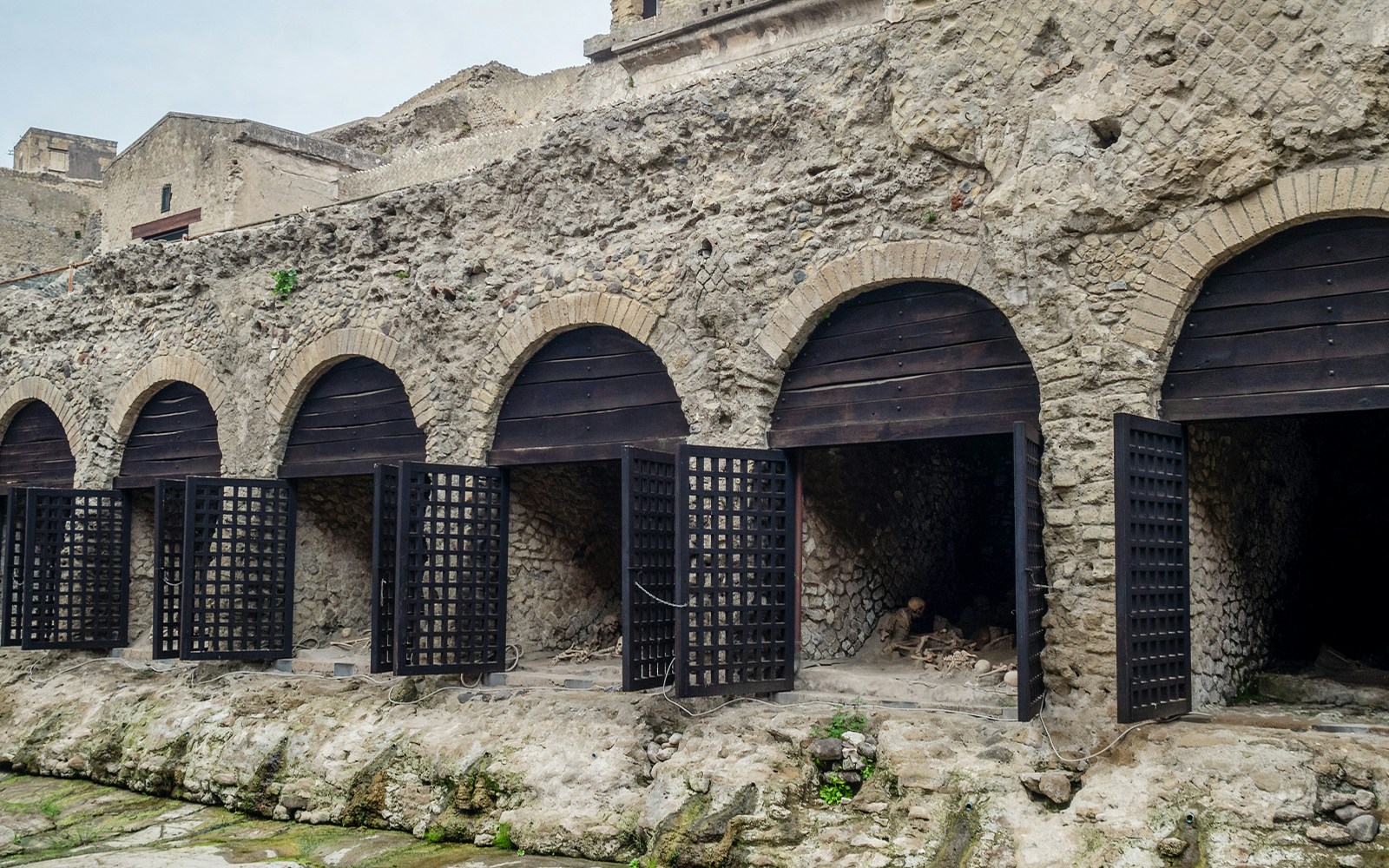
Herculaneum Ruins with ancient stone arches and preserved structures in Italy.

History & preservation

Pompeii: Buried mainly in ash; vast city snapshot with streets and public buildings.

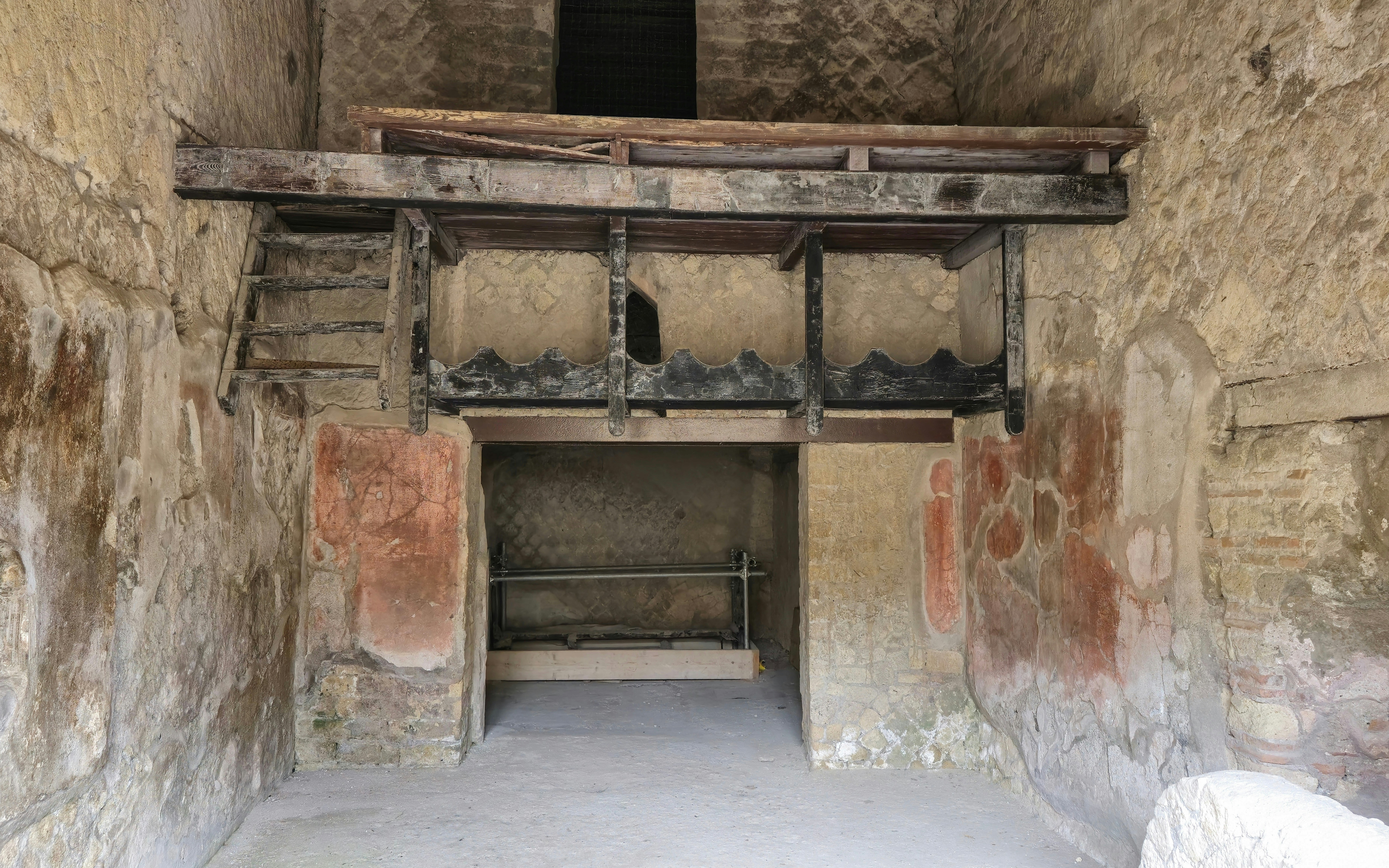
Herculaneum: Buried in pyroclastic surges; exceptional preservation of wood, furniture, upper storeys, and shoreline boat sheds. Recent works reopened the ancient beach.

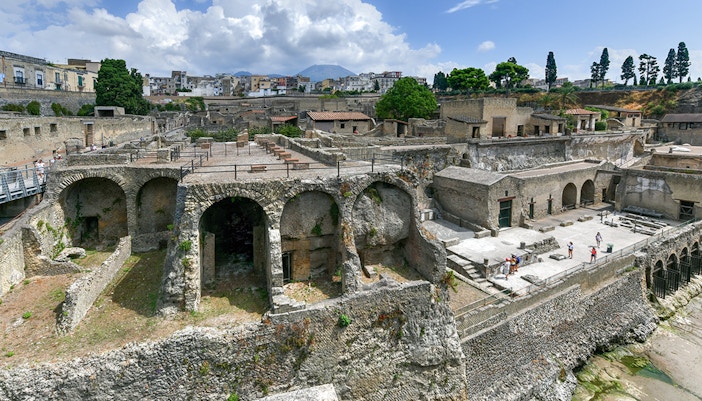
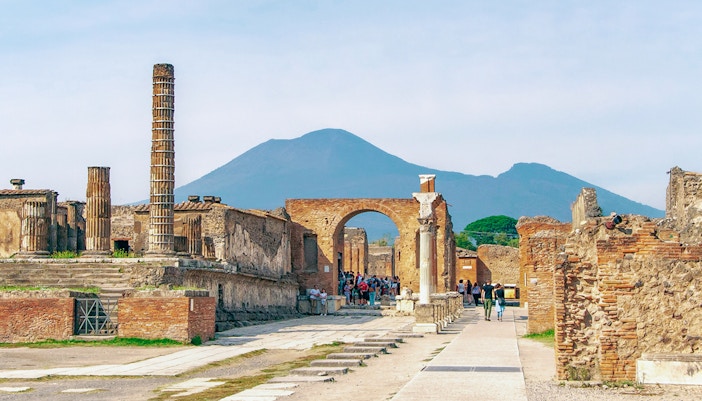
Tourists exploring Pompeii ruins with Mount Vesuvius in the background.

Experience highlights

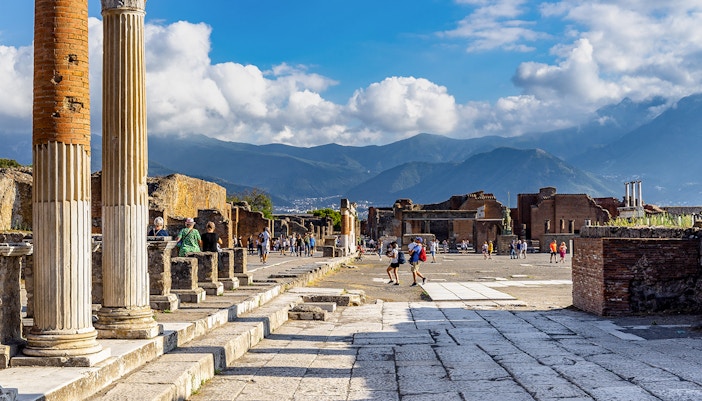
Pompeii: Forum, theatres, Villa of the Mysteries frescoes, famous plaster casts, wide urban grid.

Herculaneum: Mosaic-rich houses, carbonized timbers, vivid interiors, seaside context, and the poignant skeletons at the boat sheds.

Pompeii Forum view from via del Foro with ancient columns and distant mountains.

Atmosphere & audience

Pompeii: Epic scale, more walking, hotter and busier—rewarding for explorers with time.

Herculaneum: Intimate, shaded lanes—great for families, quick visits, or mobility-conscious travelers.

Aerial view of Pompeii Ruins with Mount Vesuvius in the background, Naples.

Location & logistics

Both sit on the Circumvesuviana network from Naples; Ercolano Scavi is closer to Naples and a short walk to the site; Pompei Scavi drops you by Porta Marina.

Group listening to archaeologist during Herculaneum tour inside ancient ruins.

When to visit

Pompeii: 09:00–19:00 in summer, 09:00–17:00 in winter; daily caps apply—book ahead.

Herculaneum: 08:30–19:30 summer, 08:30–17:00 winter; generally easier to secure slots.

Ancient ruins of Pompeii with Mount Vesuvius in the background.

Other practicalities

Pompeii: “Pompeii for All” accessible route; three main entrances; shuttle links to outlying villas via Pompeii+.

Herculaneum: First-Sunday free days; seasonal evening events; on-site and nearby facilities; season tickets from €30.

What you’ll see at Pompeii

Pompeii Basilica ruins with ancient columns under a clear blue sky.

Forum & Basilica

Civic heart with temples and market spaces framing Vesuvius views.

Tour guide with tourists at Pompeii Amphitheatre, Italy.
House of the Faun courtyard with bronze statue, Pompeii ruins.
Ancient frescoes depicting figures in the Villa of the Mysteries, Pompeii.
Stabian Baths in Pompeii with ancient frescoes and stone seating.

What you’ll see at Herculaneum

Statue of a deer attacked by dogs at Herculaneum Ruins.

House of the Deer

Terrace villa with marble deer statues and sea-facing garden.

Ancient relief sculpture depicting figures in Herculaneum archives.
Carbonised wooden shelves in an ancient room at Herculaneum, Italy.
Herculaneum boat sheds with arched entrances and ancient ruins in Italy.
Herculaneum ruins with tourists exploring ancient streets on a guided tour from Naples.

Visiting Pompeii and Herculaneum

Traveler waiting with luggage for Vesuvius and Herculaneum tour bus in Naples.
  • Pompeii: Buy online (nominative tickets; daily limit 20,000). Choose €18 Pompeii Express (city only) or €22 Pompeii+ for suburban villas; a €26 3-day multi-site ticket adds shuttle access. Under-18 free; EU 18–24 €2. Plan a visit to Pompeii
  • Herculaneum: Standard €16; EU 18–25 €2; under-18 free. First Sundays are free on designated dates; optional season passes. Pre-book via official vendor. Plan a visit to Herculaneum
  • Seeing both in a day (tour): Look for guided combos including round-trip from Naples/Sorrento with timed entry at both sites if you want narration and logistics handled.
  • Independently: Absolutely feasible—ride Circumvesuviana from Naples to Ercolano Scavi (morning), then continue to Pompei Scavi after lunch. Reverse if you prefer ending closer to Sorrento.
Visitors exploring ancient ruins at Herculaneum, Italy.

Morning – Herculaneum (08:45–11:30)

Arrive at Ercolano Scavi and walk 6–10 minutes to the gate. Follow the seafront axis to the boat sheds and ancient beach, then loop back through elite houses and baths. Coffee near the entrance.

Woman enjoying pasta on a food tour in Trastevere, Rome.

Lunch (11:30–12:30)

Grab a quick bite uphill in Ercolano or at the park café; board the train for Pompeii.

Visitors on a guided tour in Pompeii, exploring ancient ruins with a guide.

Afternoon – Pompeii (13:00–17:30)

Enter at Porta Marina by Pompei Scavi. Prioritize Forum, Theatres, Stabian Baths, House of the Faun, and Villa of the Mysteries (allow extra walking). Exit via Piazza Anfiteatro if using FS trains.

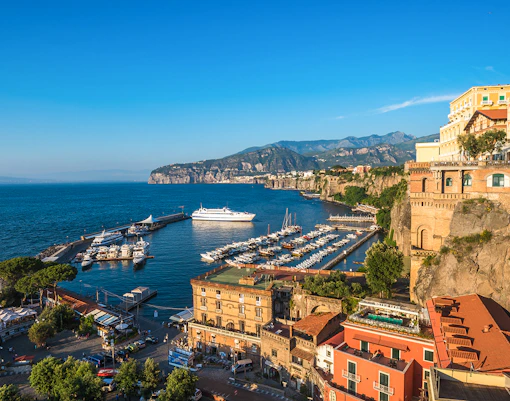
Panoramic view of Sorrento harbor and coastline, Amalfi Coast, Italy.

Evening (Optional)

Return to Naples for dinner, or continue to Sorrento on the same line for a sunset waterfront stroll.

Guests smiling inside an air-conditioned bus during transfers.

Pompeii

  • Address: 80045 Pompei, Metropolitan City of Naples, Italy | ​Find on Maps
  • By train: Circumvesuviana Napoli–SorrentoPompei Scavi–Villa dei Misteri (for Porta Marina/Esedra). FS Napoli–SalernoPompei (for Piazza Anfiteatro). Pompei Link bus connects FS to the site. 
  • By bus/car: Regional buses serve the area; paid parking around the entrances.

How to get to Pompeii? >

Herculaneum

  • Address: Corso Resina, 187, 80056 Ercolano NA, Italy | Find on map
  • By train: Circumvesuviana Napoli–Sorrento/PoggiomarinoErcolano Scavi, ~6–10 min walk downhill to the entrance. 
  • By car: Municipal parking on Via dei Papiri Ercolanesi plus private lots. 

How to get to Herculaneum? >

Visitors walking through the ancient ruins of Herculaneum basilica site.

Pompeii

  • Nov–Mar: 09:00–17:00 (last entry 15:30). Apr–Oct: 09:00–19:00 (last entry 17:30). Closed 25 Dec & 1 Jan. Free first Sundays with special entry measures

Pompeii opening hours >

Herculaneum

  • Mar 16–Oct 14: 08:30–19:30 (last entry 18:00). Oct 15–Mar 15: 08:30–17:00 (last entry 15:30). Closed 1 Jan & 25 Dec

Herculaneum opening hours >

Duration & crowd tips

Allow 4–6 hrs for Pompeii (or focus on a highlight loop); 1.5–3 hrs for Herculaneum. Book Pompeii early due to caps; Herculaneum often has better near-date availability.

Visitors reading informational displays on a guided tour in Pompeii.
  • If choosing one: Herculaneum is easier, shadier, and intensely preserved; Pompeii delivers scale and iconic landmarks but demands stamina and time.
  • Beat the heat: Start early; Pompeii’s stone streets bake by midday. Save Villa of the Mysteries or the Antiquarium for late when shadows lengthen. 
  • Accessibility: Use “Pompeii for All” from Piazza Anfiteatro; at Herculaneum, expect step-free routes and a newly accessible ancient beach
  • Ticket strategy: Pick Pompeii+ (€22) if you want suburban villas and shuttle; otherwise the €18 city ticket suffices. Herculaneum standard is €16; first-Sundays can be crowded. 
  • Transit hack: Base in Naples; ride Circumvesuviana to do both in one day with minimal backtracking. Sit near doors to exit quickly at Pompei Scavi/Ercolano Scavi
  • Free days & passes: First Sundays apply at Herculaneum; consider Campania Artecard if adding Naples museums or Caserta. Reservations may still be required. 
  • Crowd cap at Pompeii: Since Nov 15, a 20,000-visitor cap and nominative tickets help manage flow—another reason to pre-book. 

Frequently asked questions about Pompeii vs Herculaneum

Can you visit both in one day?

Yes. Start at Herculaneum (closer to Naples), then hop the Circumvesuviana to Pompei Scavi for an afternoon loop. Book both tickets in advance and travel light for faster station exits.

Which is more budget-friendly?

Base tickets are close: Pompeii €18 (city) / €22 (Pompeii+), Herculaneum €16. Under-18s are free; EU 18–25 pay €2 at both. Value shifts if you want Pompeii’s suburban villas/shuttle or Herculaneum’s season pass.

Which is better for first-time visitors to Italy?

Choose Pompeii for the big-city Roman experience—forums, theatres, casts, and epic streets. Pick Herculaneum for a concentrated hit of exquisitely preserved homes, wood, and mosaics on a shorter walk.

Which is better for kids?

Herculaneum—smaller, shadier, and less tiring. Pompeii is unforgettable but sprawling; plan breaks and prioritize a highlight loop near Porta Marina to keep energy up.

How far are they from Naples?

Ercolano Scavi is ~15–20 minutes by Circumvesuviana from Naples; Pompei Scavi about 30–40 minutes, both on the Sorrento line with frequent trains.

What if I only have a couple of hours?

Do Herculaneum. You can meaningfully cover 6–8 highlights in ~2 hours and still feel the AD 79 story. Pompeii rewards longer visits and benefits from a guided route.

Which has the “better” preservation?

For architecture at scale, Pompeii. For intimate interiors and rare organic materials (charred wood, upper storeys), Herculaneum—plus its re-opened ancient beach area adds context.

Are both included in a city pass?

Regional Campania Artecard covers many sites and transport; it’s accepted at Herculaneum and selected options for Pompeii—check reservation rules and inclusions for your pass type before buying.

How long do you need at each?

Pompeii: 4–6 hours (or a focused 3-hour loop). Herculaneum: 1.5–3 hours. Booking early helps avoid bottlenecks at Pompeii due to the visitor cap.

Which is bigger?

Pompeii is vastly larger—an entire city grid. Herculaneum is compact and denser, with multi-storey remains and elite houses close together, ideal for shorter visits.