Quick Information

Plan your visit

Did you know?

Natural light design: Unlike many catacombs, the Catacombs of San Gennaro were built with openings to allow natural light, creating a brighter and more welcoming atmosphere for visitors.

Expansion by faith: The catacombs expanded significantly after San Gennaro’s relics were moved here in the 5th century, becoming a pilgrimage site and inspiring additional burials and artistic works.

Early Christian hierarchies: The catacombs include sections reserved for bishops, highlighting their role as both burial grounds and places of ecclesiastical power in early Christianity.

Why visit Catacombs of San Gennaro?

Step into the largest early Christian burial complex in Southern Italy, where vast volcanic-rock corridors open into frescoed tombs, basilicas, and centuries-old burial chambers. Unlike narrow catacombs elsewhere, this feels open, architectural, and unexpectedly monumental.

What makes it truly distinctive is its evolution — from burial site to sacred underground network that shaped Naples’ early religious identity. You move through spaces that were not only used for burial, but also worship and gathering.

The experience feels less like exploring tunnels and more like walking through a carved underground city, where every chamber reflects a different layer of faith, power, and history preserved in stone. Most visitors leave surprised by the scale — but also by how “alive” the space still feels despite being underground for centuries.

What to see at the Catacombs of San Gennaro

Placeholder Image Headout Blimp
1/5

Upper Catacomb Galleries

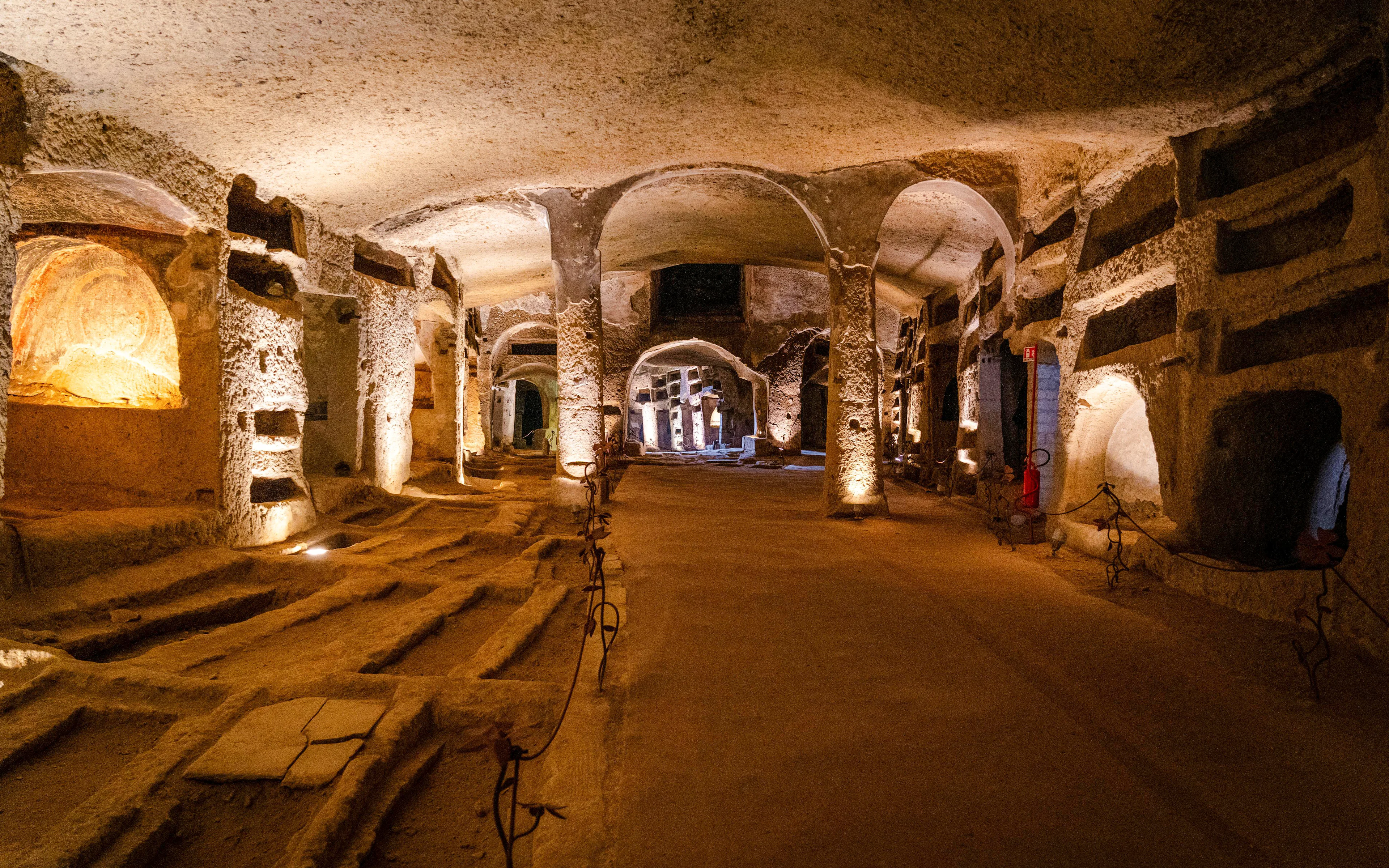
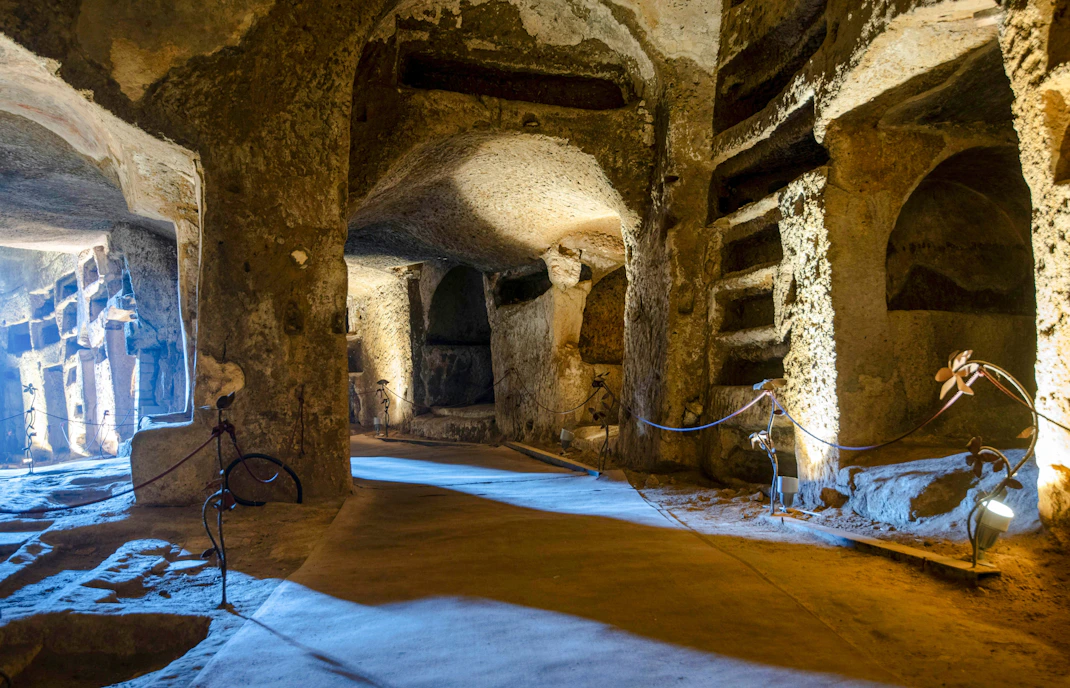
Wide volcanic tuff corridors form the main visitor route through the upper level, leading into frescoed burial chambers and early Christian tombs. This is where the scale of the catacombs first becomes visible.

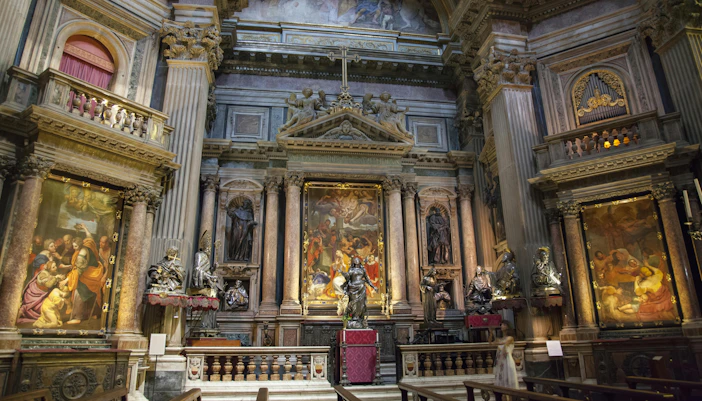
Basilica of Sant’Agrippino

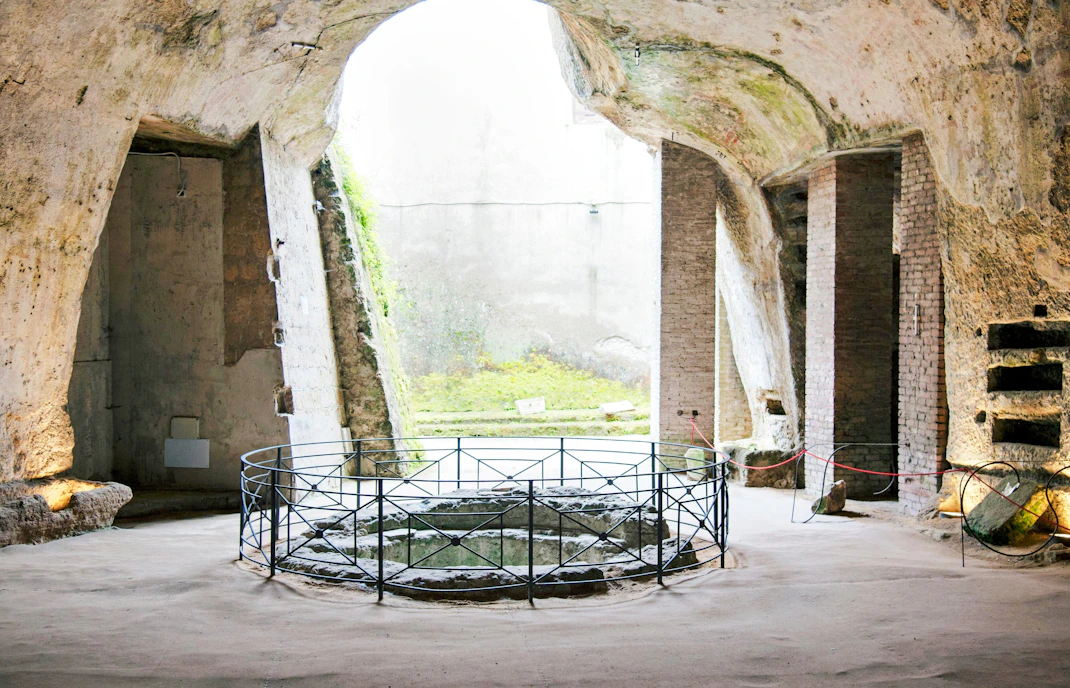
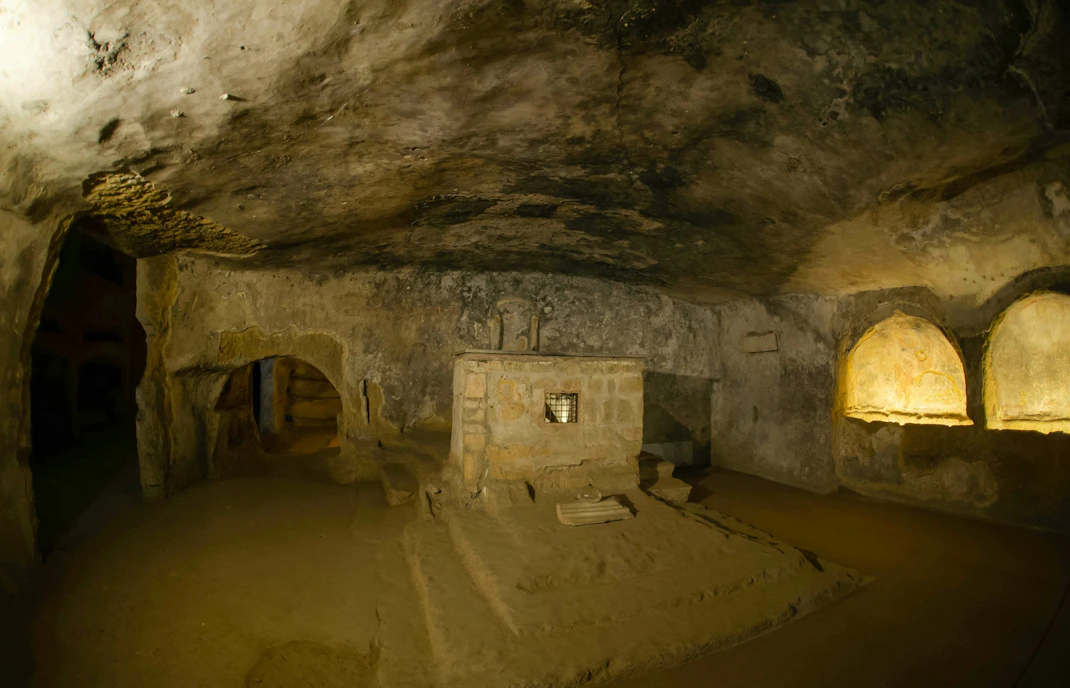
A rare underground basilica carved directly into rock, featuring an altar and bishop’s throne. It reflects how burial spaces later evolved into early Christian worship areas.

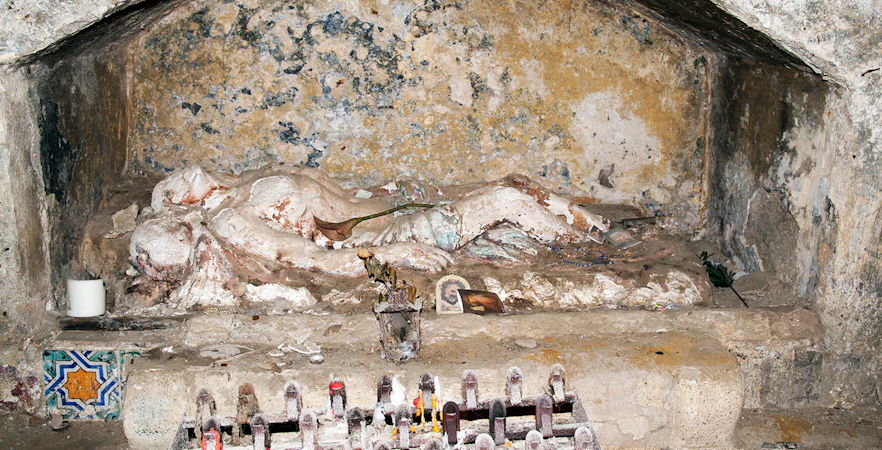
Crypt of San Gennaro

A sacred chamber associated with Naples’ patron saint, later becoming a major pilgrimage site. Its intimate scale contrasts with the larger cathedral-like spaces nearby.

Crypt of the Bishops

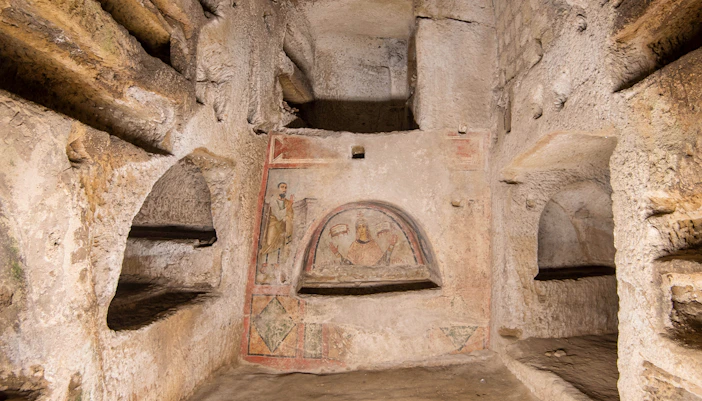
An important burial zone for early Christian bishops of Naples, marked by vaulted ceilings and decorated tomb structures that reflect religious hierarchy and status.

Frescoed Burial Chambers

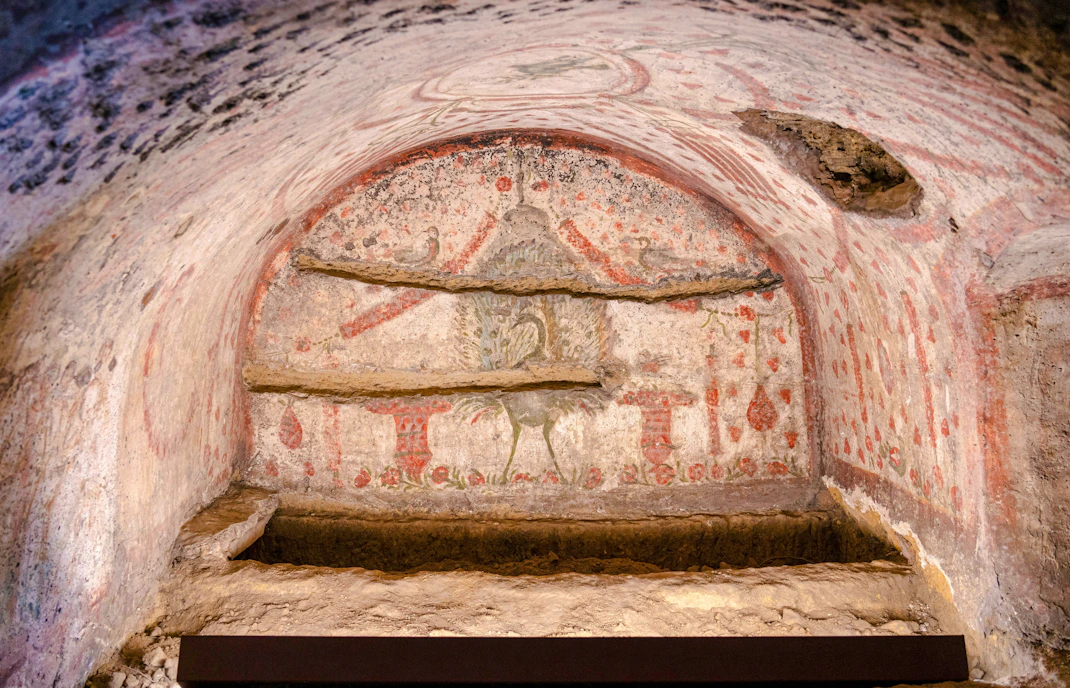
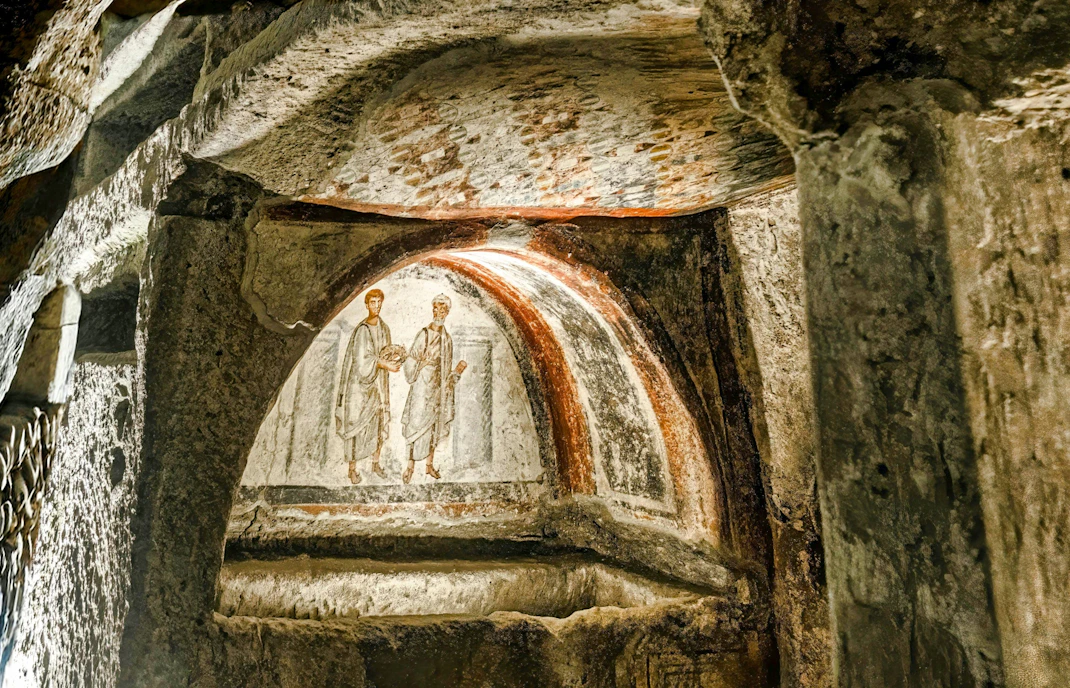
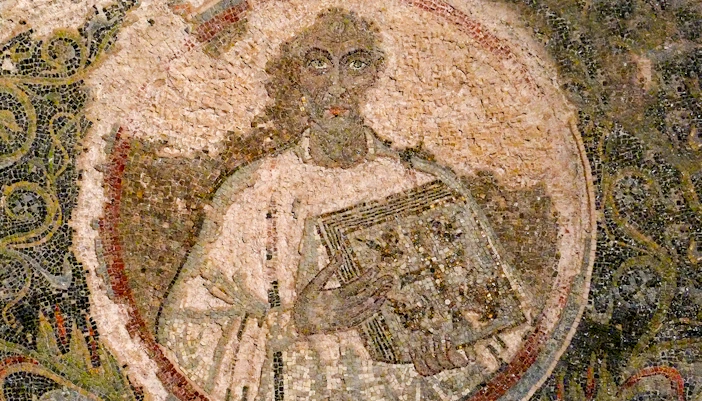
Family tombs featuring rare early Christian frescoes and symbolic paintings. These decorated chambers reveal how art, faith, and burial traditions merged underground.

The catacombs reveal their story only with context

The Catacombs of San Gennaro come alive with a guided tour that explains frescoes, bishops’ crypts, and underground basilicas. Choose an English or Italian guide for the full experience, including access to San Gaudioso highlights.

View ticket options →

How to Explore the Catacombs of San Gennaro

Upper Catacomb Route

Begin your journey in the upper catacomb, where wide volcanic tuff corridors open into painted tombs and early Christian burial spaces. This is the main guided route and introduces the historical foundation of the site.

Key highlights:

  • Walk through 3rd–5th century burial galleries
  • See frescoed family tombs and symbolic Christian art
  • Follow the main guided path with historical narration
  • Pass key stops like early basilica spaces
Underground Basilicas

Step into vast rock-cut basilicas carved directly into the stone, where early Christians created sacred worship spaces underground. These areas show how the catacombs evolved beyond burial grounds.

Key highlights:

  • Visit Basilica of Sant’Agrippino
  • See carved altars and bishop’s throne in tuff stone
  • Understand early Christian worship practices underground
  • Experience large, open cavern-like chambers

Sacred Crypts

The crypts form the spiritual core of the catacombs, marking important burial and devotional spaces linked to Naples’ early Christian heritage.

Key highlights:

  • Crypt of San Gennaro (devotional highlight stop)
  • Crypt of the Bishops (early episcopal burials)
  • Painted walls and symbolic religious motifs
  • Quiet, reflective atmosphere away from main corridors

Frescoed Burial Chambers

End your exploration in intimate family tombs decorated with rare early Christian frescoes. These chambers reveal personal stories preserved in stone and paint.

Key highlights:

  • Ancient frescoes with Christian symbolism
  • Family burial niches carved into volcanic rock
  • Unique artistic details rarely seen elsewhere
  • Final emotional highlight of the route

Brief history of the Catacombs of San Gennaro

  • The origins of the Catacombs of San Gennaro date back to the 2nd century AD, when a family tomb was carved into the soft volcanic tuff outside ancient Naples. Over time, the site expanded into one of the most important Christian burial complexes in southern Italy.
  • By the 3rd–4th centuries, the catacombs developed into a vast underground necropolis with wide corridors, arched tombs, and painted burial chambers used by early Christian communities. In the 4th century, the Basilica of Sant’Agrippino was built, marking the transformation of the site into a sacred worship space.
  • In the 5th century, the burial of San Gennaro’s relics turned the catacombs into a major pilgrimage destination, leading to further expansion on the upper level. Later, in the 9th century, Bishop John I restored parts of the complex and added liturgical elements, proving it remained an active sacred site.
  • After centuries of neglect, the site was rediscovered and restored in the 2000s, becoming a community-led heritage project that continues to preserve Naples’ underground history today.

Architecture of the Catacombs of San Gennaro

Volcanic Tuff Excavation & Early Structure

The entire catacomb system is carved into Naples’ natural volcanic tuff, a soft rock that allowed ancient communities to expand the underground network over centuries. This geology is the reason the catacombs feel so vast and naturally formed.

What makes it unique:

  • Carved directly into volcanic rock beneath Naples
  • Wide corridors shaped by centuries of excavation
  • Multi-level burial chambers and passage networks
  • Naturally stable temperature and humidity underground

Walking through it feels less like entering a structure and more like stepping inside a hollowed ancient earth.

Layered Sacred Architecture

The catacombs are not a single construction phase but a layered sacred landscape built over centuries. Each generation added new burial zones, frescoed chambers, and underground basilicas, shaping a complex spiritual city beneath Naples.

Key architectural layers:

  • 3rd–5th century expansion of burial galleries
  • Integration of rock-cut basilicas within tunnels
  • Frescoed tombs for elite families and clergy
  • Continuous adaptation of sacred spaces over time

This layering creates a rare sense of walking through different historical eras in one continuous underground route.

Who built it?

The catacombs were not built by a single ruler or architect. They developed under the collective patronage of Naples’ early Christian bishops and communities. Their focus was spiritual rather than architectural innovation, prioritising sacred burial proximity over formal design. In modern times, the La Paranza cooperative restored and reinterpreted the site, ensuring its preservation and public accessibility.

Additional information about Catacombs of San Gennaro

A major part of the Catacombs’ modern identity is shaped by the Rione Sanità community above it. Since the early 2000s, and formally from around 2006, the La Paranza cooperative has played a key role in restoring the site, guiding visitors, and creating local employment opportunities for young residents of the neighborhood.

Unlike a static archaeological monument, the catacombs function as a living heritage project where tourism directly supports preservation and community development. After your visit, exploring Rione Sanità adds important context, with its historic churches, street art, local bakeries, and vibrant daily life reflecting the cultural layer that surrounds the underground world.

Frequently Asked Questions About the Catacombs of San Gennaro

Yes. It is one of Naples’ most atmospheric underground sites, combining early Christian history, frescoed tombs, and vast volcanic corridors. The scale and storytelling make it far more immersive than typical catacomb visits.

More Reads

Timings

Directions

Plan your visit