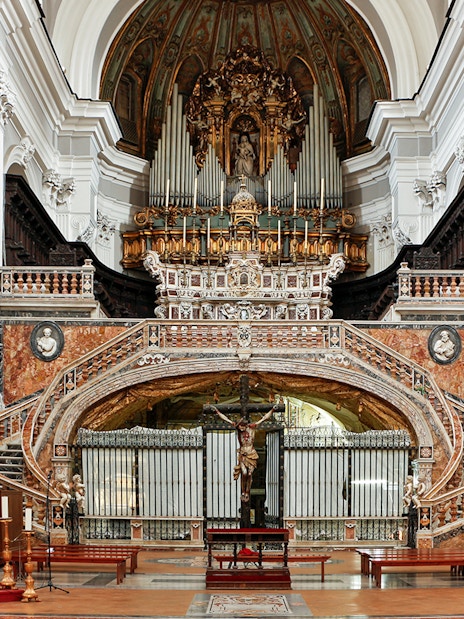
✝️See Christian artifacts and treasures
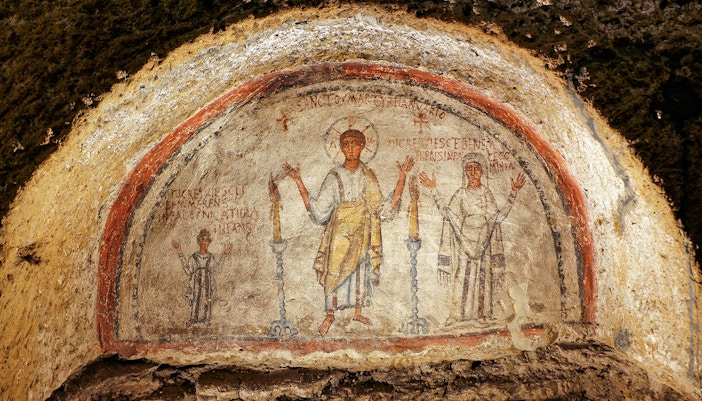
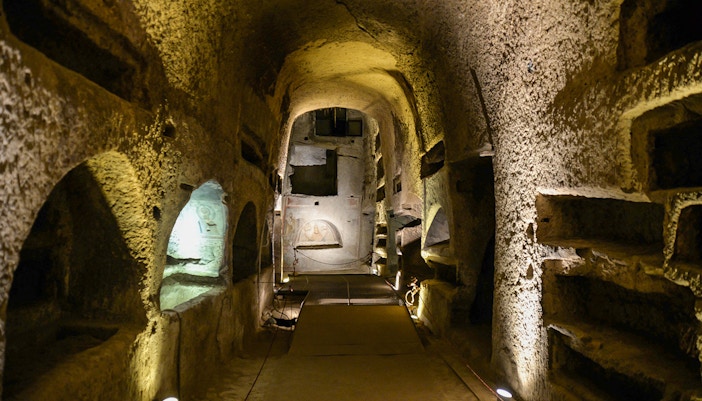
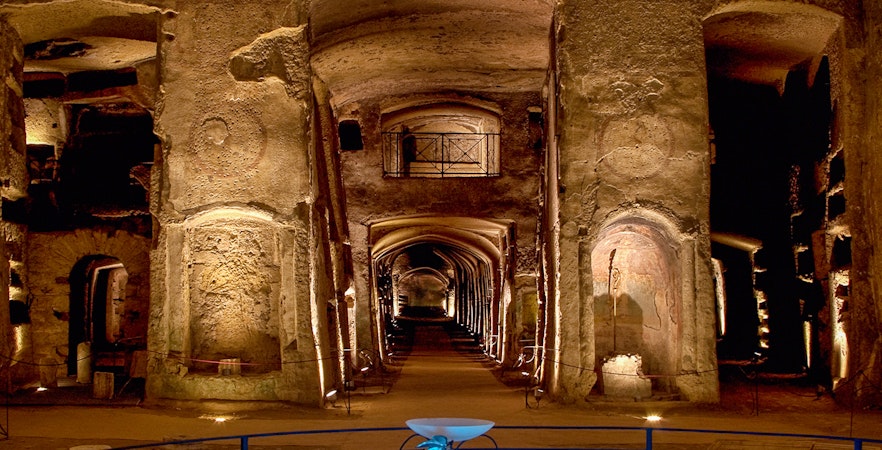
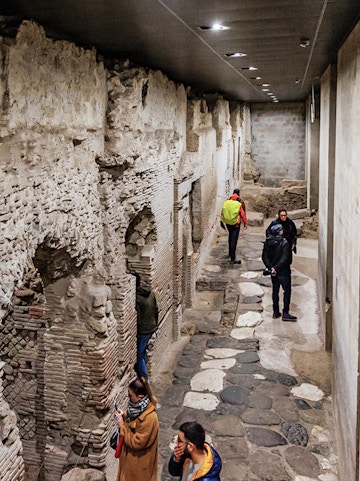
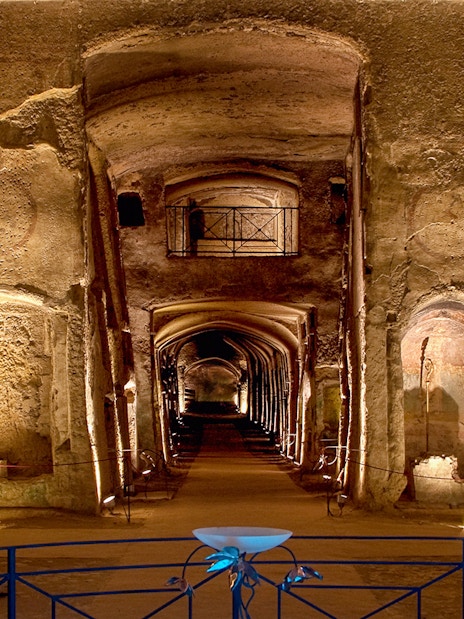
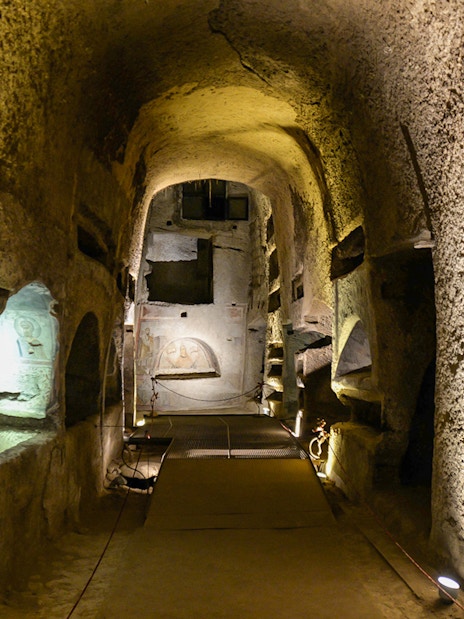
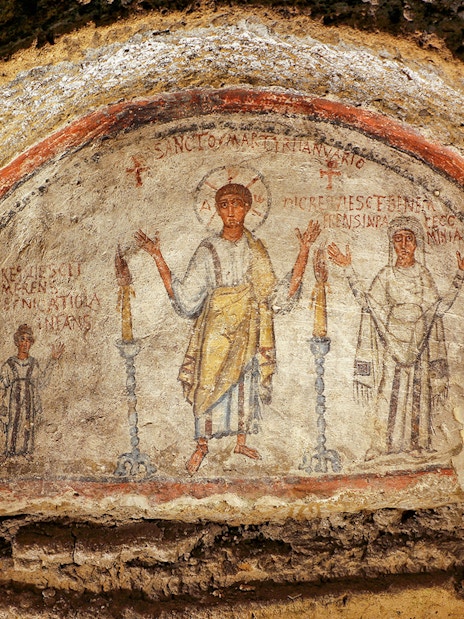
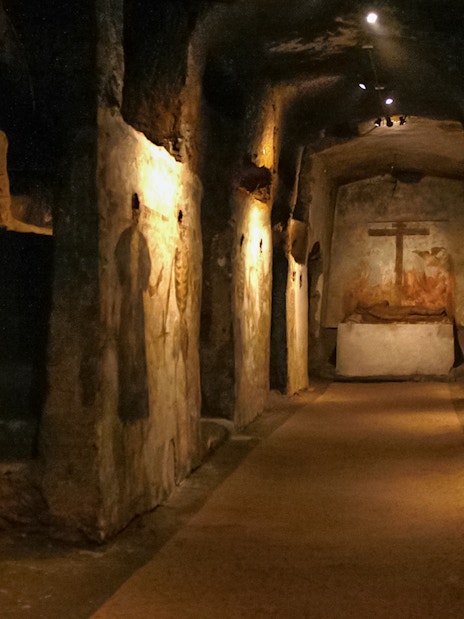
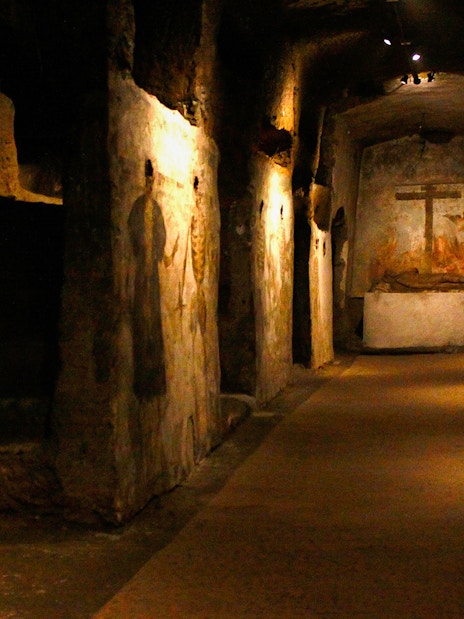
Inside the catacombs, visitors can find a rich collection of splendid frescoes that illustrate both biblical scenes and images of early Christian life, epitaphs, and crypts. The main characteristic of this place is a fresco representing the Madonna della Sanità and is the oldest picture of Maria in the Campania region.
☠️Discover rare Renaissance burial art
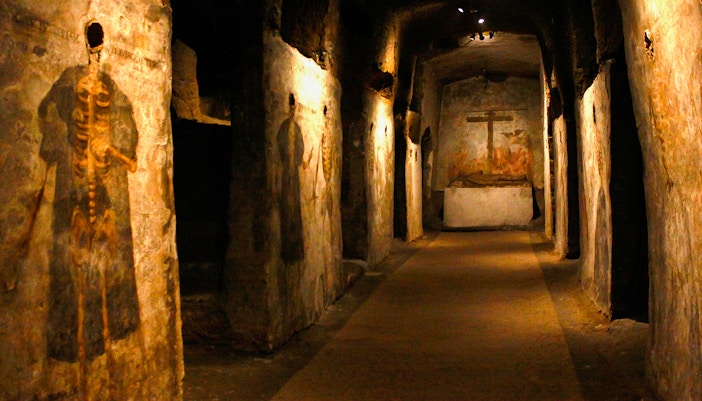
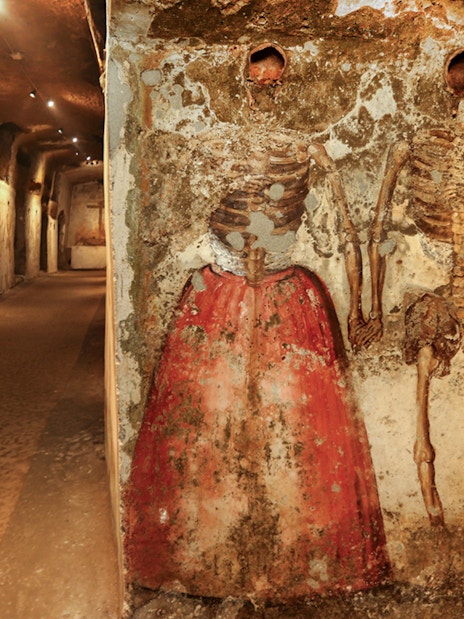
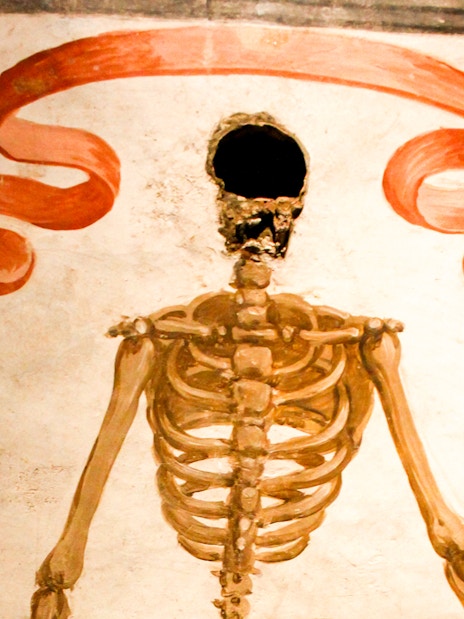
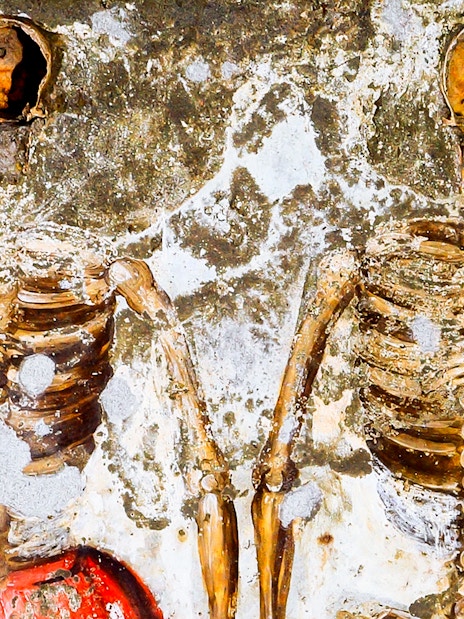
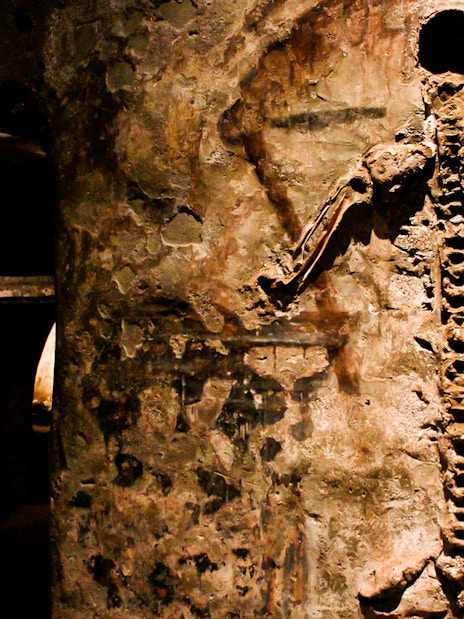
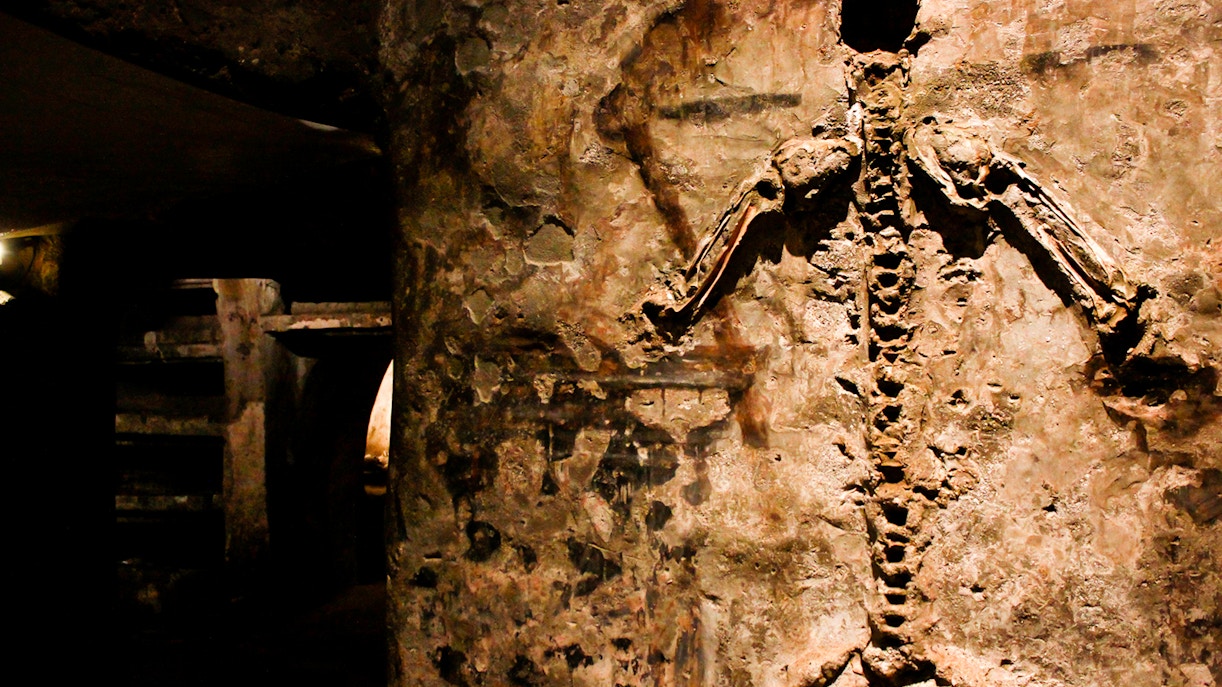
The Catacombs of San Gaudioso uniquely blend early Christian traditions with Baroque artistry. Admire skull-and-bones frescoes paired with painted skeletons, a striking form of funerary art that reflects the era's fascination with mortality and the afterlife.
🪦Explore the Tomb of San Gaudioso
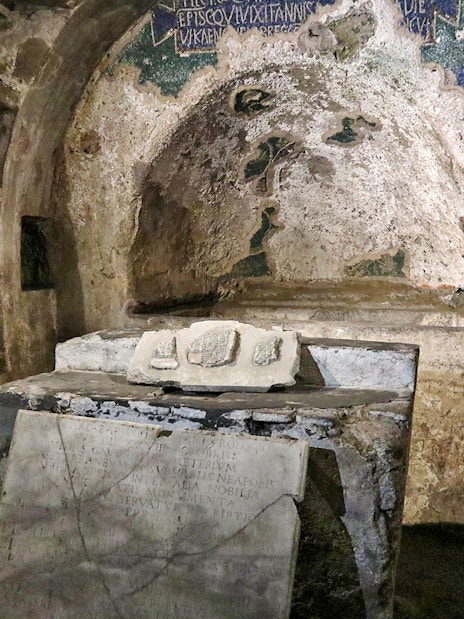
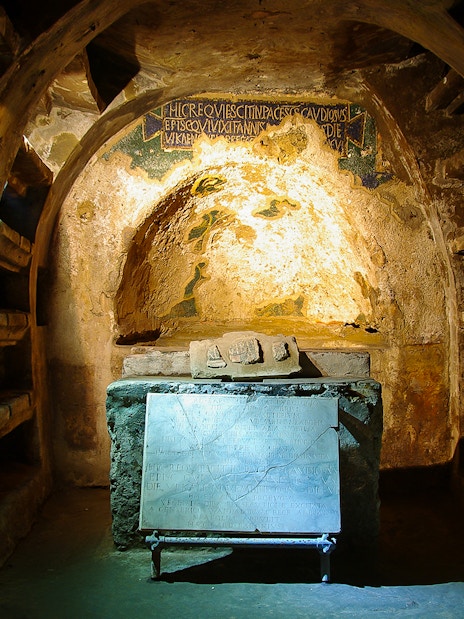
This catacomb is named after Saint Gaudiosus, a North African bishop who fled to Naples in the 5th century. His tomb remains a focal point, surrounded by early Christian mosaics and inscriptions that narrate his life and legacy.
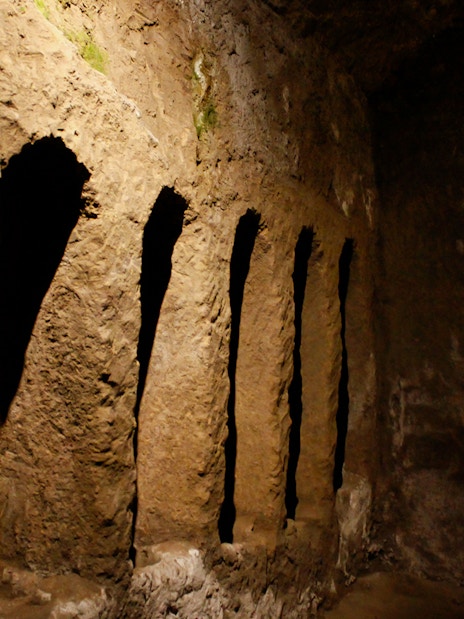
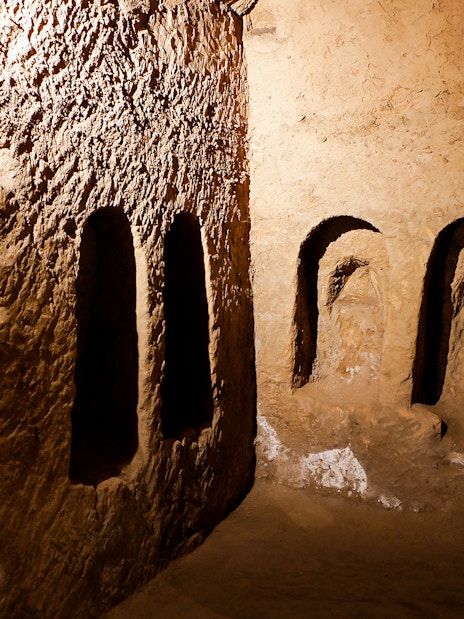
🩻Witness Naples’ unique ‘draining’ burial method
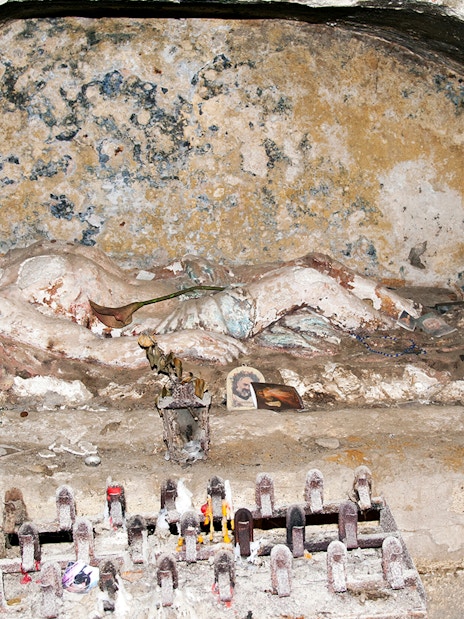
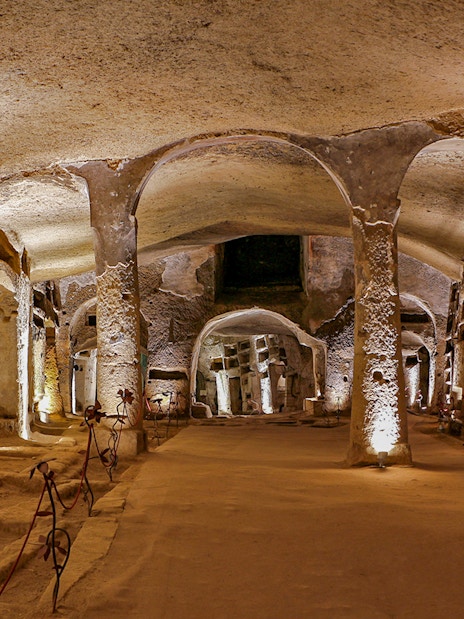
Unlike other burial traditions, the catacombs showcase the scolatoi, a fascinating method where bodies were drained of fluids before interment. An exclusive practice that provides insight into the city’s macabre customs.